
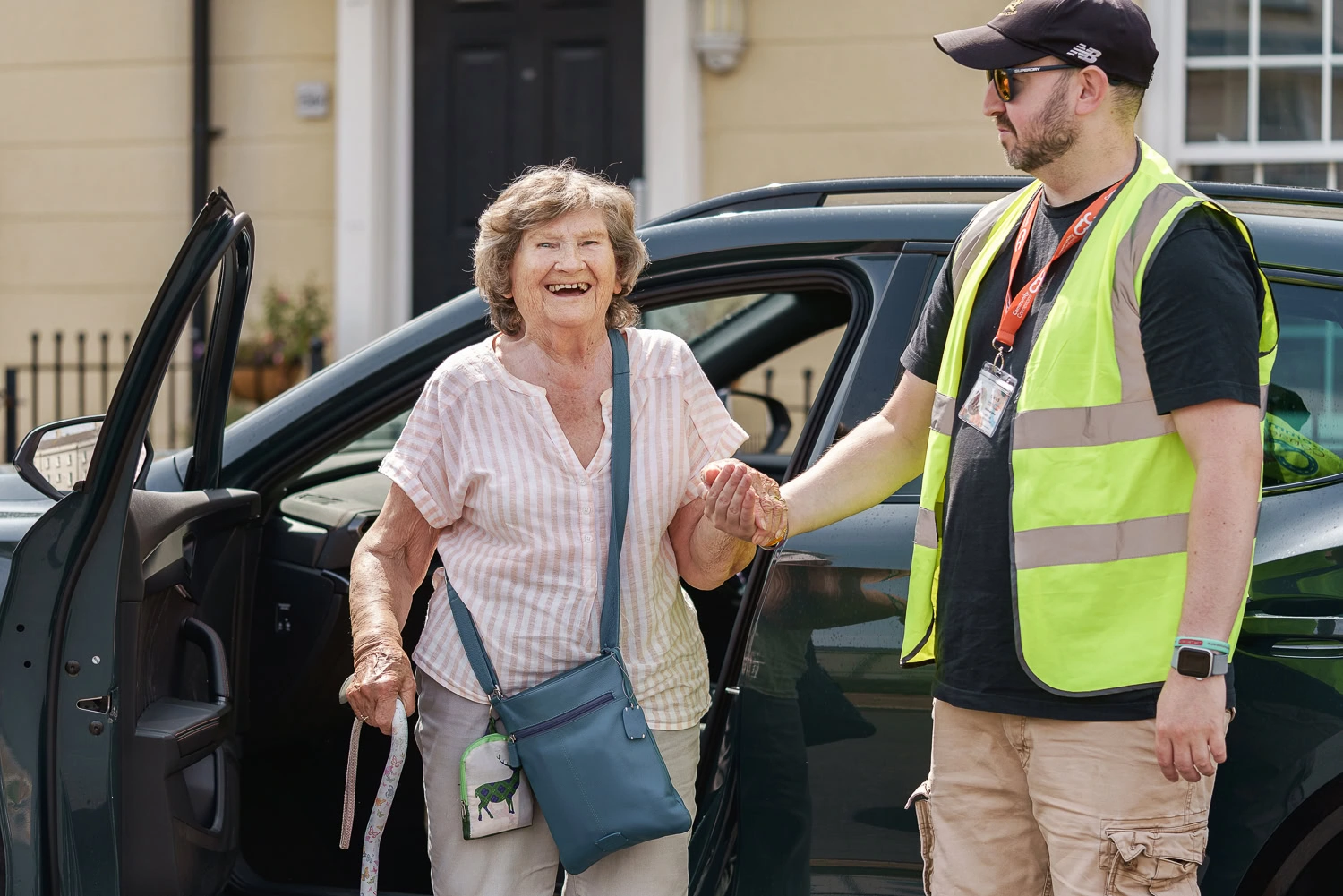
“‘I really enjoy being sociable with people. I’m a part of the community helping like this!”
Charlie, Volunteer Driver
There are many studies that consistently show benefits for people who volunteer. As well as enjoying volunteering work and the satisfaction of making a difference, we know that volunteering can have important effects on mental wellbeing and physical health.
The biggest impact of volunteering is on people’s general mental wellbeing. Volunteering is shown to reduce stress and anxiety for most people who take part. It increases life satisfaction, improves self-confidence and reduces symptoms of depression. Volunteering is a great way to meet new people and can make people feel less isolated.

These benefits on general wellbeing help physical health too. Over half of people who volunteer describe improvement in physical health. Volunteering involves people being more active and alongside reduction in stress and anxiety has benefits for blood pressure and lowers stress hormones with benefits for heart and circulation health (including high blood pressure, heart attacks and strokes), weight management, and mobility. Immune responses are enhanced and people find they can function more independently as they age.
The good evidence for the mental and physical benefits of volunteering has resulted in volunteering becoming ‘an intervention in itself’ and supporting people into a volunteering role is an important strategy used by health professionals and others who are supporting people living with physical and mental wellbeing challenges.
“From a volunteer perspective a great thing about Community Connexions is being able to specify when you can and can’t volunteer so you don’t have to make a commitment to do every single Monday for example. The administration involved is also very straightforward. Community Connexions staff are all very helpful and supportive.”
David, Volunteer Driver